

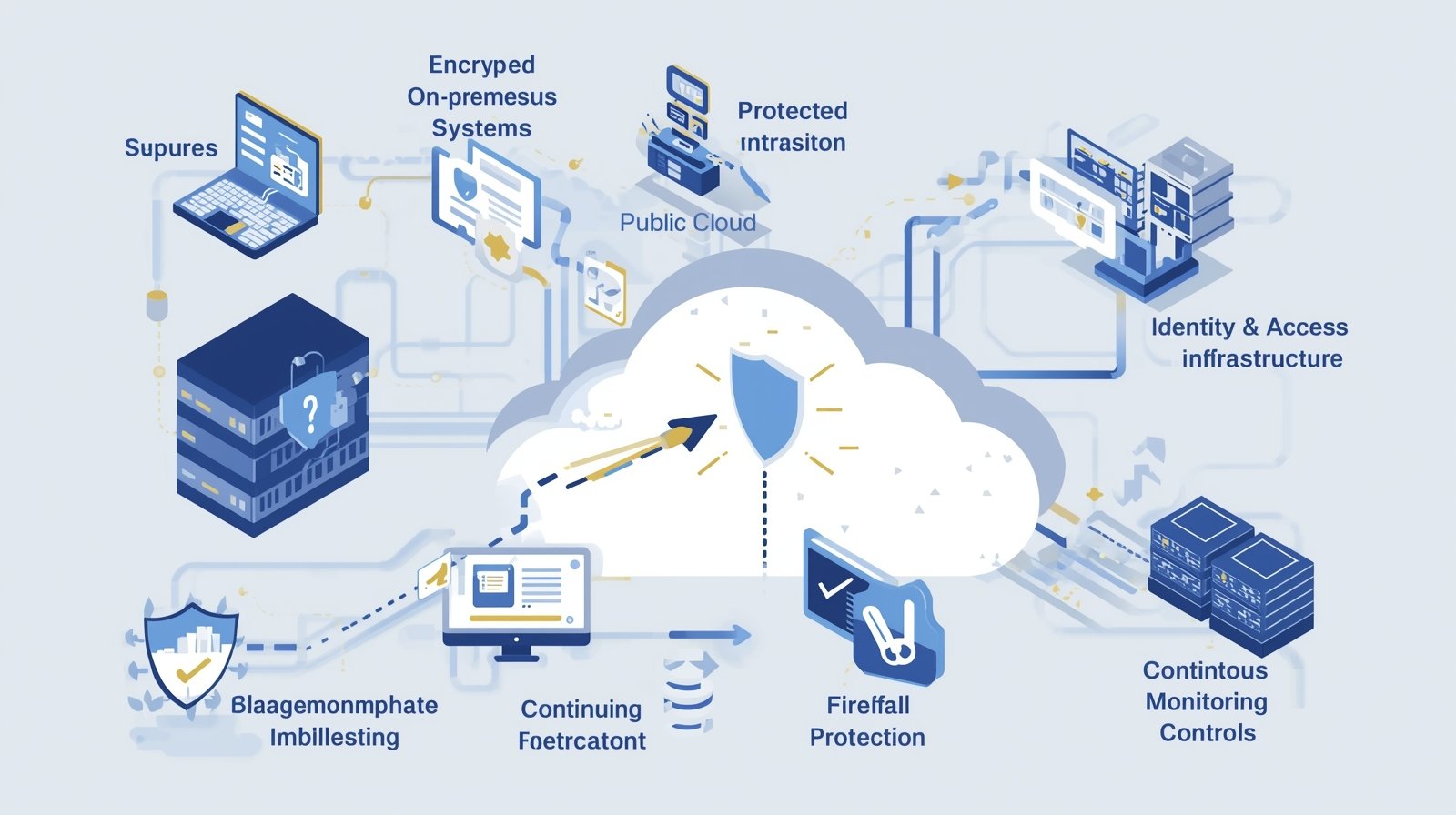
Cloud migration security is important as businesses shift applications, data, and infrastructure away from on-premises legacy systems to the cloud. Cloud migration enables flexibility, scalability, and operational efficiencies, but it can also expose a business to new security threats if not properly managed. A safe migration means secure data that is trusted before, during, and after the move to the cloud. This article describes cloud migration security in simple language, focusing on the risks, planning processes, technical controls, and ongoing security practices that enterprises should be making use of to minimize their risk.
What Is Cloud Migration Security?
Cloud migration security is the procedures, rules, and policies that are used to protect data, applications, and systems once they are moved from on-premises to the cloud. It is dedicated to protecting sensitive data, accessibility issues, service unavailability, and compliance violations through the full migration life cycle.
Cloud Security is Shared. Unlike security models of the past, in a cloud environment, the responsibility is shared. The basic infrastructure itself is protected by the cloud providers, and organizations are ultimately responsible for securing their workloads, data, identities, as well as configurations. Cloud migration security ensures the following responsibilities are explicitly defined and managed from planning through post-migration operations.
Why Security Matters During Cloud Migration
Migration is one of the highest-risk aspects for cloud onboarding. Systems are reconfigured, and data is migrated; access rights change. If not properly monitored, such changes can pose a grave threat.
The importance of security during migration: A few of the reasons that make security a priority during migration are as follows:
- Data exposure during transfer
- Misconfigured cloud services
- Unauthorized access to systems
- Compliance violations
- Downtime caused by security incidents
A proactive security plan during migration minimizes such risks and ensures a seamless transition, maintaining trust and business continuity along the way.
Typical Cloud Migration Security Risks
The first step to properly manage risks is to understand them.
Data Leakage
Information may be vulnerable when access to transferred data is not encrypted or when encryption settings/installation are incorrect. Temporary storage, backup files, or test environments: this is often where it is the weakest.
Misconfigurations
There’s also typically a bunch of configuration settings on this for cloud services. A misconfigured server can reveal databases, storage or management interfaces to the internet.
Identity and Access Issues
Migration also includes the addition of new users, service roles and permissions. Loose privileges or bad authentication can also help to give you the attackers access.
Shadow IT and Untracked Assets
Teams may spin up cloud resources without proper visibility or approval, creating unmanaged security gaps.
Compliance Gaps
There may be differences in data residency, retention policies, and audit demands when you move to the cloud. Neglecting them can create regulatory headaches.
Planning for Cloud Migration Security
Security also has to be incorporated into migration planning from the word go, not bolted on afterwards.
Security Assessment
Before migrating, organizations should assess:
- Data sensitivity and classification
- Regulatory requirements
- Existing security controls
- Application dependencies
This assessment helps identify which workloads require extra protection through cloud-first cybersecurity strategies.
Define Security Responsibilities
Explicitly define which security responsibilities are the cloud provider’s and which belong to you. This transparency foregoes the guessing game that would result in security holes.
Create a Migration Security Plan
A migration security plan outlines:
- Encryption standards
- Access control policies
- Monitoring and logging requirements
- Incident response procedures
This plan should align with overall business security goals.
Key Controls for Cloud Migration Security
Data Protection Measures
It is crucial to encrypt information when it is in motion as well as at rest. Secure transfer mechanisms minimise the risk of interception and encryption at rest safeguards stored data from unauthorised access.
Identity and Access Management
Robust identity management provides the ability to authorise who and what can connect to your cloud services. Best practices include:
- Multi-factor authentication
- Role-based access control
- Temporary credentials for migration tasks
Network Security
Network segmentation, firewalls, and private connectivity choices are also available to isolate workloads and limit exposure during migration.
Logging and Monitoring
Watching directory logs will let your team notice something suspicious happening early on. They should retain records of access, changes in configuration, and functionality of the system.
Configuration Management
Agents can validate cloud configurations for compliance with security standards, minimizing the chance of accidentally exposing information.

Cloud Migration Security Best Practices
Secure migration and long-term protection are supported by the following practices:
- Adopt a security-first mindset during planning and execution
- Use automation to reduce human error
- Apply least-privilege access across all services
- Secure backup data and temporary storage locations
- Test security controls before production deployment
- Document security decisions for audits and reviews
These practices help ensure that cloud migration security remains consistent and reliable.
Security Considerations After Migration
Migration does not end security responsibility. Once systems are live in the cloud, ongoing protection is required.
Post-Migration Validation
After migration, teams should verify:
- Access permissions
- Encryption status
- Network rules
- Logging coverage
Validation ensures that security controls remain intact.
Continuous Monitoring
Cloud environments change frequently. Continuous monitoring helps detect configuration drift and emerging threats.
Patch and Update Management
Cloud workloads still require timely updates. Vulnerabilities in applications or operating systems can undermine even strong migration security.
Compliance and Governance
Regulatory requirements do not disappear in the cloud. Cloud migration security must support compliance with industry and regional regulations.
Governance frameworks help by:
- Defining security policies
- Standardizing controls across environments
- Supporting audits and reporting
- Ensuring accountability
Strong governance makes security sustainable as cloud usage grows.
Human Factors in Cloud Migration Security
Technology alone cannot guarantee security. Human behavior plays a major role.
Training and Awareness
Teams involved in migration should understand:
- Cloud security basics
- Common misconfiguration risks
- Secure access practices
Clear Communication
Security, dev and ops need to be closely tied together. Migration-related misunderstandings can occur which is associated with neglected risks.
Long-Term Value of Secure Cloud Migration
When implemented correctly, cloud migration security provides lasting benefits:
- Reduced risk of data breaches
- Improved visibility into systems
- Better compliance management
- Stronger trust with customers and partners
Security becomes an enabler rather than a barrier to cloud adoption.
Conclusion
For organizations making the move to the cloud, we believe that cloud migration security is fundamental for defending data and systems. Through careful planning, risk awareness, strong controls and ongoing oversight, organizations can secure their journey to the cloud pave. A measured security strategy makes the cloud less risky while enabling its stability and growth in the long run.