

Security of Public Cloud is a major concern for businesses and other institutions that are using cloud computing. With organizations migrating data, applications, and services to public cloud environments, defending these workloads is crucial for safeguarding sensitive data from unauthorized access, breaches or operational risks. In today’s post, we’re diving into what public cloud security is all about, the significance of it, the primary challenges associated with achieving it, and best practices organizations should adopt in order to ensure a strong security posture when it comes to using public cloud technology. Explore our homepage hub for cloud security guidance
What Is Public Cloud Security?
Public cloud security is a set of policies, technologies, and controls deployed to protect data, applications, and the associated infrastructure of cloud computing. The public cloud offerings come from companies like Amazon Web Services (AWS), Microsoft Azure, and Google Cloud, which offer shared infrastructure across customer clients over the internet. With shared online resources, security had to be handled well in order to keep operations secure. Public cloud security involves shielding against data breaches, unauthorized access, misconfigurations, and other threats that may impact resources based in the cloud.
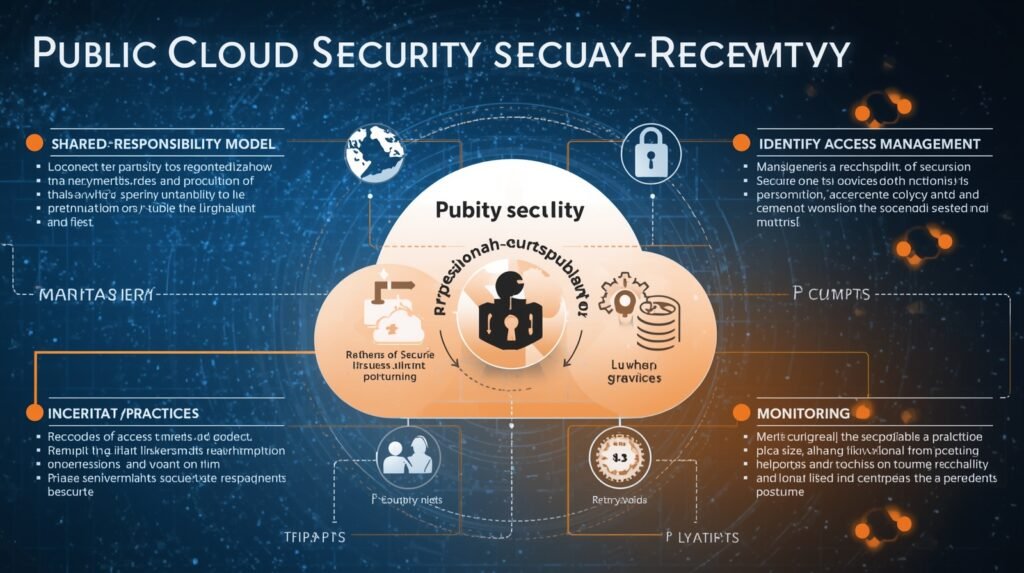
In the public cloud, security responsibilities are shared between the service provider and its customers. In terms of security responsibilities, the providers secure and protect the infrastructure their services run; customers must then safeguard their data, applications, access rights, and configurations.
Why Public Cloud Security Matters
The use of cloud computing has become more prevalent, and with all that sensitive data being held and processed in the cloud. Public cloud security is important for a number of reasons: cloud security insights and resources
- Data Protection: A cloud-based business typically includes vital business data such as customer details, financials, and IP assets. Information security makes sure this data cannot be used as a threat.
- Business Continuity: Security breaches can disrupt business and lead to loss of revenue and service downtime. Good security prevents such distractions.
- Compliance: Many sectors need to adhere to legal and regulatory requirements such as GDPR, HIPAA, and PCI DSS. A secure public cloud ensures organisations are able to comply.
Exposure without encryption Cloud NativeTM computing resources are exposed to exploitation by the bad guys, resulting in breaches, data loss, and reputational damage.
Challenges for Security in Public Cloud
Public clouds provide great flexibility and scalability, but they bring with them some specific security challenges:
1. Shared Responsibility Model
You need to know about the shared responsibility model. Cloud providers secure the cloud, but they do not secure their clients’ environment or data. Misreading this model could result in security coverage holes.
2. Misconfigurations
Misconfiguration of the cloud resource is one of the primary security issues. Misconfigurations can leave storage buckets, databases or virtual machines open to the internet, making them accessible without authorization.
3. Identity and Access Risks
Without strong authentication, too much privilege, and unaccounted-for accounts, systems get compromised. Proper identity access management is key in order to avoid account takeover and privilege misuse.
4. Insecure APIs
APIs are the glue between cloud-based services and applications. Unsecured APIs, if not adequately protected, can act as an attack surface for malicious actors to gain unauthorized access or control over the cloud resources.
5. Insider Threats
Security may be compromised by employees or contractors with whom access has been shared, or parties authorised to have access may inadvertently cause data breaches. So, the management of internal access and its activity is crucial to reducing this potential risk.
Key Principles of Strong Public Cloud Security
To counter the above challenges, companies ought to zero in on central security principles that inform robust defense policies.
1. Shared Responsibility Clarity
Enterprises need to understand exactly where the responsibility for security lies, and who is responsible for what. This transparency leaves nothing to chance in terms of security planning.
2. Identity and Access Control
Your identity and access management (IAM) mechanism should enable strong authentication and least privilege — only allowing users the minimum privileges for their jobs. Multi-factor authentication (MFA)goes further than the password.
3. Encryption
For data at rest or in transit, encryption prevents unauthorized access to that content. Secure encryption and key management are necessary to protect sensitive information.
4. Continuous Monitoring and Logging
Logging and monitoring solutions provide for the discovery of suspicious activity in real time. These utilities notify security teams about potential alerts and also serve as forensic data that can be used for investigation.
5. Vulnerability Management
Frequent scanning and patching of vulnerabilities helps in protecting systems from known threats. Automatic aids can keep security current in cloud properties.
6. Configuration Management
Keeping the secure, tuned , and best-practice configurations of cloud resources maintained from accidental exposure. Utilities like Cloud Security Posture Management (CSPM) automatically check configurations and highlight holes.
7. Compliance Frameworks
Although there are different requirements for public cloud security within an organization, we recommend that companies align with standards and regulatory considerations. Frameworks provide third-party assurance that security policies, practices, and controls are in line with external requirements and the organization’s internal policies.
Practical Steps to Get Started
Whether an organization is new to using public cloud services or expanding its existing operations, here are steps to improve security:
- Assess Current Security Posture: Know where your data and workloads are located, evaluate the current state of security controls.
- Develop a Public Cloud Security Plan: Clearly define who is responsible for what on both ends.
- Deploy Strong Authentication and Encryption: Implement IAM rules and encryption for sensitive data.
- Monitor and Respond: Use monitoring tools and define incident response plans.
- Train Your Team: Educate users about secure practices, including recognizing phishing and managing credentials.
Conclusion
What Is Public Cloud Security? Public cloud security is critical for today’s businesses, which routinely use cloud hosting to store and process data. Once they understand the risks and apply transparent approaches to security based on a shared responsibility model, organisations can better secure their cloud environments against risk – while also retaining confidence in the eyes of customers and stakeholders. Decent identity controls, encryption, configuration management, monitoring and alignment to compliance are critical components of a sound public cloud security approach.